polski
 español

 Aleksander Janicki
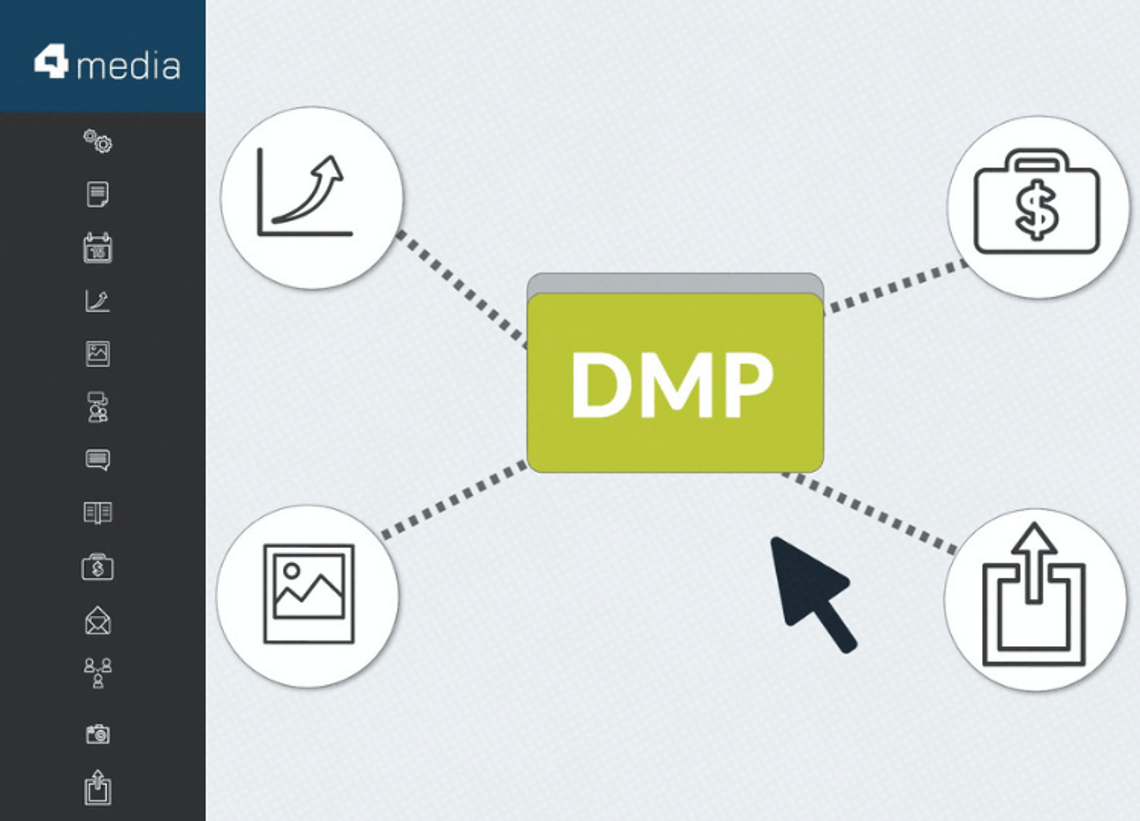
In brief:
A data management platform (DMP) helps publishers and advertisers collect, organize and activate audience data for digital advertising
It groups users into audience segments that advertising systems can use for targeting
Programmatic automates the buying and selling of ad inventory, and DMP segments help match ads to audiences
You can create audience segments (for example, by interests), although targeting options depend on the publisher’s data and user consent and may be more limited than those available on major advertising platforms
In the U.S., privacy requirements vary by state and may call for notices and opt-out options, so check which rules apply to you
It can help publishers increase the value of their ad inventory and help advertisers spend their budgets more efficiently
It can create new opportunities for local and regional publishers, provided they have enough traffic and good data quality
You can use a DMP by partnering with a provider such as DMP 4media
Table of contents
- What is a data management platform (DMP)?
- How does a DMP work?
- Key DMP features
- How DMP segments are used in advertising
- What is real-time bidding (RTB)?
- DMP vs. CDP: what’s the difference?
- What are the benefits of a DMP for digital advertising?
- Why a DMP can matter for local news publishers
- DMPs, cookies and data privacy
- How to get started with a DMP
What is a data management platform (DMP)?
A data management platform (DMP) helps publishers and advertisers collect, organize and activate audience data for digital advertising.
DMP stands for data management platform. The name reflects its main purpose: organizing audience data for advertising.
So what does a DMP actually do?
How does a DMP work?
A DMP is a platform that collects, organizes and segments data about users from many sources, such as cookies, browsing history and on-site interactions. The availability of this data depends on the browser, privacy settings and user consent.
When people visit your website, they generate data through their browsing activity and interactions, which you can collect in line with the privacy rules that apply to you (more on that below).
Data in a DMP is usually divided into three categories. First-party data is collected directly by you, for example from your website, newsletter sign-ups or a CRM. Second-party data is another company’s first-party data shared with you through a partnership. Third-party data comes from outside sources, such as data brokers. First-party data is usually the most valuable and the most straightforward to work with, although it still has to be collected and used within applicable privacy rules, with clear notice and respect for users’ choices. Third-party data is increasingly limited by privacy laws and browser restrictions, although it is still used for audience building.
Why collect all this data?
By analyzing audience data, a DMP helps build audience segments and deliver ads that are more relevant to the people seeing them.
For example, a DMP can show that your website is visited by 1,536 women aged 30–40 who are interested in fashion (provided the data is available).
For publishers, audience insights can help ad sales teams show advertisers the value of their inventory and build more relevant campaign proposals.
Data keeps coming in with each visit: the system may record, for example, how a user interacts with your content and use it at the next visit, where technically possible and permitted by the user’s privacy choices.
Programmatic is a model that automates the buying, selling and serving of ads and enables a high level of personalization.
It considers the available signals, such as page context, device or time of day. Campaigns may also include direct deals and manual optimization.
In this model, different users may see different ads in the ad slots on different pages. The system may use available signals to estimate how likely an ad is to engage a user, and whether an ad is displayed is decided by an auction in which the bid must also meet qualification and quality requirements (known as RTB, explained below).
Where is this going? DMPs are increasingly built around first-party data (such as logged-in readers and newsletter subscribers), partner integrations, and identity solutions that do not depend on third-party cookies, for example IDs based on hashed email addresses. Some vendors also combine DMP and CDP features. The right choice depends on your traffic, your data and your privacy requirements.
Key DMP features
Personalized ads: ads are targeted at users who are likely to be interested in the advertised product or service
User profiling: building user profiles based on needs, interests and behavior
Audience modeling: by matching new users to existing user types, you can reach them with ads even when you have little data about them (the matching is based on modeling, so accuracy is limited)
Insights to support business decisions: as more data becomes available, you can refine your audience segments over time
Content and product recommendations: a DMP helps you match content and products to the readers most likely to want them
Data monetization and sale: you can use audience data to improve ad targeting and monetize your ad inventory. You can also collect and sell data, provided that its nature, legal basis and the conditions under which it was obtained allow it
Better audience knowledge: DMP analysis helps you understand the interests and behavior of your readers
Audience growth: a well-planned strategy built on DMP data can help you grow your audience and build stronger relationships with your readers.

How DMP segments are used in advertising
The process is largely automated, so you don’t have to analyze the data manually.
The platform processes data from the sources available to it and starts building user profiles.
A DMP can use available signals to build audience segments based on browsing activity, content interests, device type and other relevant information. For example, someone who regularly reads articles about computer hardware may be more likely to engage with ads for related products, provided the necessary data is available and can be used lawfully.
In this way, the system assigns users to audience segments.
Another example: someone who frequently buys discounted items can be classified as a bargain hunter and shown ads promoting limited-time offers.
In revenue models based on performance (for example, CPA or affiliate), the publisher may receive part of the revenue from the purchase.
RTB (real-time bidding) enables advertisers to bid for individual ad impressions in real time.
What is real-time bidding (RTB)?
Real-time bidding (RTB) is an automated auction in which advertisers bid for individual ad impressions as a page loads. The process typically takes a fraction of a second, often a few hundred milliseconds or less, depending on the system.
Most auctions run on the OpenRTB standard from IAB Tech Lab, and prices are usually quoted as CPM, the cost per thousand impressions. Users’ privacy choices can also be passed along with the bid request, so they can be respected throughout the ad supply chain.
Advertisers set in advance how much they are willing to pay for an impression.
The auction result depends on its rules (for example, floor prices and the resolution mechanism), bid qualification and quality criteria, not only on the highest price.
Buying impressions that target a particular user type may make a campaign more effective and improve sales results.
One clarification: a DMP collects and segments data, but it does not buy or sell ads itself.
Advertisers buy ad inventory through a DSP (Demand-Side Platform), while publishers sell it through an SSP (Supply-Side Platform) and an ad server. Segments from a DMP can be passed to these systems.
DMP vs. CDP: what’s the difference?
These terms are often confused. A DMP focuses on audience segmentation for advertising, often using pseudonymous data such as cookies and device IDs. A CDP (Customer Data Platform) builds a unified customer profile from first-party data, including data about known, identified customers, and makes it available to other systems such as marketing, sales and support tools.
Which one fits depends on whether your main goal is ad monetization or customer relationships. Some vendors combine features of both.
What are the benefits of a DMP for digital advertising?
For advertisers, a DMP can improve ad relevance, but it also has limitations: data quality, integration costs, limited availability of identifiers and privacy requirements.
Traditional contextual advertising often involved placing ads on websites whose content was relevant to the target audience. DMP-based audience segmentation can offer another approach by helping advertisers reach relevant users across participating websites.
For example, a company selling car air fresheners might advertise on automotive websites.
This approach can require more manual planning and offer less precise audience targeting.
It can also limit campaign reach and potential returns. Potential buyers visit other websites too, and many visitors to automotive sites are looking for repairs, not air fresheners.
With audience segmentation, targeting is not limited to the audience of a single site.
Targeting can be based on segments and signals about the user, and retargeting is possible only where the browser, privacy settings and user choices allow it.
A DMP can only use the data and signals available to it, subject to applicable privacy requirements and users’ choices.
Typical signals include location, age, gender, browsing history and the website being visited, where such data is available and can be lawfully used.
Such signals help advertisers reach the right audience more accurately, meaning people with a higher potential to buy the product or service.
Ad revenue often depends on how long readers stay on your site, so content and ads that match their interests can support higher revenue per session.
You have probably seen it yourself: after you search for a product, ads for similar goods can keep appearing for a long time, even after you have bought it.
If the advertiser applies exclusions for users who have already made a purchase, unnecessary ads can be limited.
That has two advantages. First, better targeting can help advertisers allocate their budgets more efficiently by reducing spend on audiences that are unlikely to convert.
Second, readers are not put off by ads that do not interest them, so they may spend more time on your website.
Prioritizing ad relevance over ad volume can also mean fewer banners on your news site, which may improve page performance and the reading experience.
Why a DMP can matter for local news publishers
Local and regional news publishers can use a DMP to better understand and monetize their audiences.
Local publishers can use audience segments to make their ad inventory more attractive to advertisers. The available targeting options depend on the data they collect, their ad-tech partners and applicable privacy rules.
Better ad matching and a clearer picture of the audience can help local news publishers negotiate higher rates for their ad inventory, and can reduce the number of irrelevant ads readers see.
For local publishers, the most valuable asset is often first-party data: newsletter subscribers, registered or logged-in readers, and what they read. Because it comes directly from your audience, first-party data is less dependent on third-party cookies and can offer a more reliable basis for audience insights. It is also generally easier to manage responsibly, but it still has to be collected and used within applicable privacy rules, with clear notice and respect for users’ choices.
Both sides can benefit: readers see more relevant ads, and you may increase your ad revenue, although that is not guaranteed.
Relevant ads may also drive more clicks and purchases, which can generate additional referral or affiliate income, depending on the billing model.
More effective targeting may make your ad inventory more attractive to advertisers.
DMPs, cookies and data privacy
Browsers matter a lot here. Safari and Firefox already block third-party cookies by default. Chrome, the most widely used browser, has kept third-party cookies and leaves the choice to the user, and in October 2025 Google retired most of its Privacy Sandbox ad-tech APIs, so third-party cookies are not going away in Chrome for now. Still, cookie-based audiences are less reliable than they used to be, which is why publishers increasingly rely on their own first-party data.
Using data in advertising must comply with the data protection and privacy rules that apply to you, and these differ by region. In the United States, privacy requirements come largely from state-level laws, which vary in scope, thresholds and details, and the rules continue to evolve.
In general, these laws focus on transparency and user choice: telling people what data you collect and why, giving them ways to opt out of certain uses, such as the sale or sharing of data and targeted advertising, and, for some categories of sensitive data, asking for their consent first. Which obligations apply to you depends on the state, your business and your data practices, so it is worth checking with a lawyer.
Some states also require websites to honor browser-based opt-out signals such as Global Privacy Control (GPC), and regulators have taken enforcement action over opt-out failures. These requirements are changing, so check the current rules for the states where your readers live.
Whatever the legal minimum, making opting out harder than opting in (for example, one click to accept and many clicks to refuse) is risky and may draw regulators’ attention.
In practice, publishers usually handle this with a consent management platform (CMP) that records users’ choices and passes them on to ad partners. Industry standards such as IAB Tech Lab’s Global Privacy Protocol (GPP) are commonly used to pass these signals along the ad supply chain, but using a standard does not by itself guarantee legal compliance. If your website also serves visitors from the EU or UK, stricter consent rules (such as GDPR) may apply to them, often handled through a CMP aligned with IAB Europe’s TCF standard. Whatever the region, sharing data with other companies should be covered by contracts and clear disclosures.
A note on selling data. Selling or sharing personal data is regulated. In the U.S., it may trigger opt-out rights and, in some states, registration requirements for data brokers, and the rules in this area are changing. If your business sells or shares audience data, check with a lawyer which rules apply to you.
How to get started with a DMP
A DMP is worth considering if your website has enough traffic and you want to make better use of your own data.
How do you get started?
Building and maintaining a DMP in-house can be costly and technically complex. For publishers who want to use audience data without developing their own infrastructure, working with an established provider may be a more practical option.
Our 4media CMS is integrated with a data management platform.
We collect and analyze data from various sources. We have helped many local publishers throughout Poland to succeed, and more than 800 media outlets across six countries, including local newspapers and news sites in the U.S., use CMS 4media.
We also provide a comprehensive CMS 4media tool that will help you build your news website, manage it easily and generate revenue from it.
You won’t need to manage the technical complexity yourself.
We take care of the technical side, so you can focus on running your publication.
Contact us to schedule a free demo: [email protected].