polski
 español

 Magdalena Szypulska
Search traffic is less predictable, social platforms send fewer readers back to publisher sites, and AI-generated answers are starting to take over questions that used to end in a click. That's the picture painted by data from Piano, a subscription and analytics platform used by hundreds of publishers worldwide.
A paywall isn't just a way to lock an article anymore. It's an attempt to answer a harder question: what is a reader actually worth?
That question matters even more in a market where paying for news has never been the default. A 2025 Reuters Institute survey found that in most countries studied, only a small minority of people say they paid for any online news in the past year - the U.S. figure sits well below half. In other words: most readers, most of the time, aren't paying for news as a category.
And yet the market keeps building more paid-access models - from large digital subscriptions to small, specialized outlets built from day one around a mix of free and paid content. That's not really a contradiction. It shows publishers no longer treat "paying for news" as one single decision. They're looking for narrower, more specific reasons a reader might actually pay.
Readers are reluctant to pay for news in general. But they'll pay for something concrete: data, analysis, access to know-how they can't get anywhere else.
The problem doesn't start at the paywall
For a long time, publishers thought of the paywall mainly as a tool to grow subscriber counts. A reader hits a few articles, a prompt appears, some users buy access.
Piano's data across its publisher base points to a more interesting pattern. Between 2022 and 2024, traffic across the publishers it tracked grew only 5%. Conversions - cases where a visitor actually bought a subscription - rose 14%. Subscription revenue rose 28%. Among sites that were losing traffic during that period, 54% still managed to grow their number of paid subscriptions.
So it wasn't about finding more users. It was about finding higher-value ones - readers more likely to convert.
The 2025 numbers make that gap even sharper. According to a follow-up Piano report, search traffic across the same publisher base fell 36%, but revenue fell by much less, because the readers who remained converted at a higher rate than before. Average new-subscription revenue per search visitor rose 31%.
Less traffic doesn't have to mean proportionally less money.
That's a meaningful shift, because for years, a publisher's success was measured mostly in users and pageviews. Increasingly, the more important question is how many of those users come back, how often they engage, and whether there's a reason for them to stay.
The most valuable reader isn't the one who clicks the most
The same Piano data shows a sharp split between two kinds of search visitors. The first are casual readers - people who land on a single article from a specific search and typically never return. They made up nearly half of all search traffic across the publisher base. But they accounted for only 0.3% of new subscription revenue, and their average revenue per reader was under 20 cents.
The second group are highly engaged readers - people who come back to a publisher regularly, read widely, and treat that outlet as a recurring source of information. This group is far smaller in raw numbers, but generates a disproportionate share of subscription revenue. Its share of search traffic changed far less in 2025 than the casual group's did - meaning it was largely insulated from the broader traffic decline.
In practice, a shift in search algorithms can look far worse in traffic charts than it does in revenue. Thousands of casual visits disappear, but a large share of them were never worth much in subscription terms to begin with.
For a publisher, the more important question stops being "how many users do we have?" and becomes "how many of them have a reason to come back?"
That shifts the focus from pure traffic acquisition toward relationship-building. A newsletter, a reader account, personalized recommendations, or a direct return visit can matter more than a single search click.
In Piano's 2025 data, direct traffic - readers typing in a URL directly or using a bookmark - overtook search traffic's share for the first time, and traffic from aggregators, including Google Discover, also grew.
Digiday: registration as the bridge to a subscription
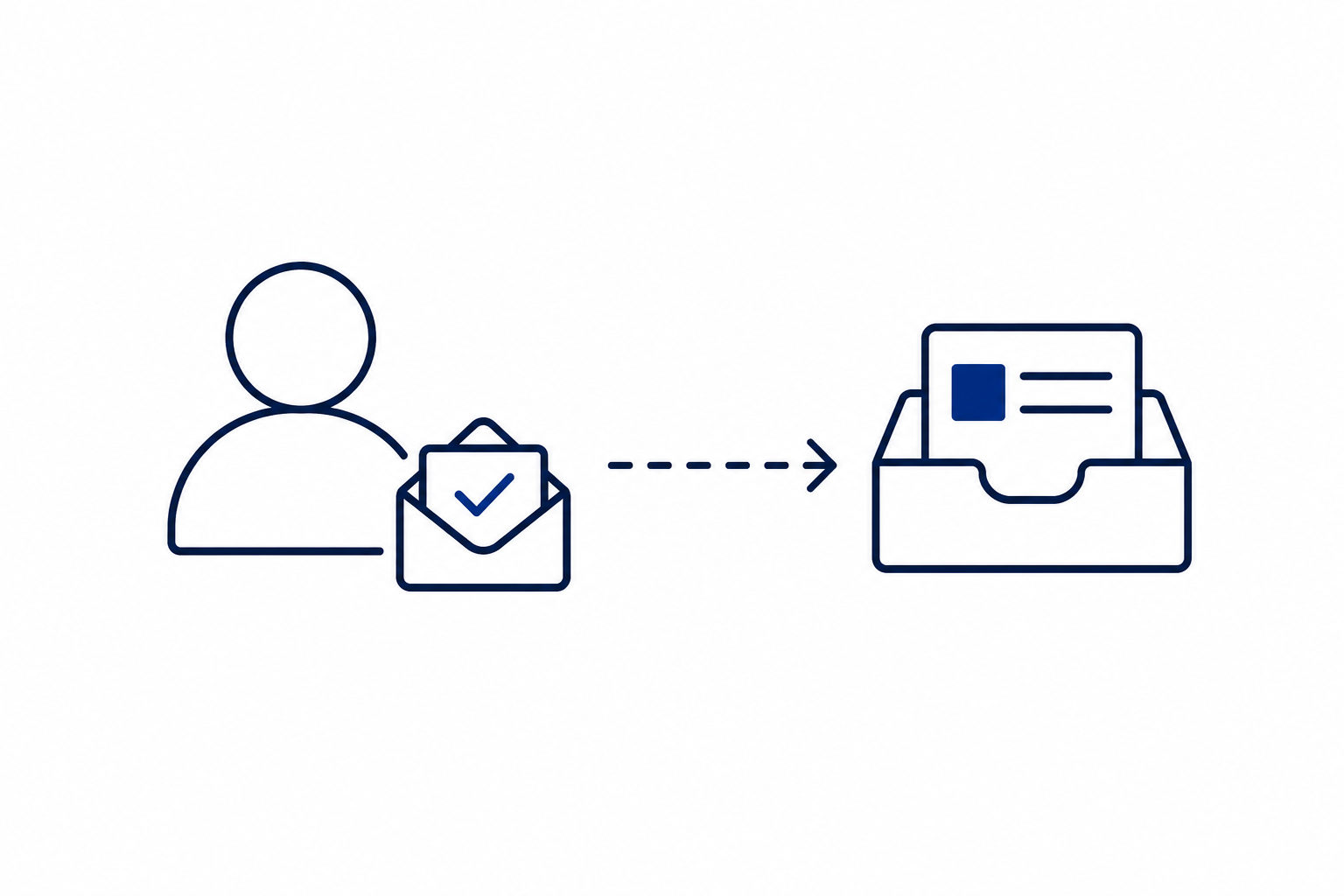
A smaller, specialized publisher shows this shift clearly. Digiday is a New York-based trade publication covering media, marketing and advertising. It launched in 2008 with what Wikipedia's own entry on the outlet describes as "optional registration" for most of its history - readers could browse freely, register, or do neither.
In 2019, Digiday explained its own strategy shift directly to readers. Rather than putting up a hard paywall, it expanded its existing membership program, Digiday+. Non-members would be capped at a small number of free articles - typically around four - while members got unlimited access, original research, and event perks. The company noted it had built this into a profitable, roughly 80-person media business without venture capital backing.
The first currency doesn't have to be money. It can be consent to further contact.
This matters especially for trade and specialist media. If a reader works in marketing, advertising or media, their value doesn't have to come from how many articles they've read - it can come from simply being part of a specific professional audience that advertisers and business partners want to reach. That's part of why Digiday built its membership tier around research, events and daily briefings, not just article access.
Not every registered reader becomes a paying subscriber. But every registered reader stops being anonymous - and that's already a starting point for a longer relationship.
Google leaves publishers room to decide how much to show
Discussions about paywalls often get reduced to a choice between protecting content and staying visible on Google. In practice, the system is more flexible than that framing suggests.
Google lets publishers decide for themselves how much of a locked article a casual search visitor sees before hitting a paywall. A publisher might give every reader a handful of free articles per month before restricting further access - Google itself suggests a starting point of roughly 6 to 10 articles a month, recommending publishers start near the higher end and test how tightening that limit affects traffic and conversion over time. A publisher can also choose to show only an opening excerpt - a few sentences, sometimes called a lead-in - instead of cutting a reader off completely once they hit the limit. Google treats this as good practice, since even a short excerpt gives a reader some value and can build curiosity that helps conversion, rather than simply presenting a wall. Google doesn't mandate any particular approach here - it leaves the decision to the publisher, as long as paid content is properly labeled.
This also affects visibility in search results: the more of an article Google can actually read and index, the better it understands what the piece is about, and the easier it is to surface it to the right searcher.
Google also pays attention to the experience of readers who aren't subscribers yet. Its own documentation for publishers states that reader satisfaction starts dropping noticeably once a paywall blocks access more than roughly 10% of the time - and Google explicitly advises against approaching that threshold without testing first, since that's the point where a publisher risks losing readers who haven't yet had a chance to see the value of the content.
A paywall can be more effective when most readers never actually encounter it - and only run into it when they're genuinely interested in that specific piece of content.
For a publisher, that means distinguishing between someone who stumbled onto a single article and a reader who consumes content regularly. For the second group, the barrier can reasonably appear sooner, since the odds they'd be interested in a subscription are higher.
The paywall is also a technical problem
How a paywall is built has direct consequences for SEO.
Google requires publishers to clearly mark which part of a page is paid content. Structured data is the mechanism for that - specifically the property isAccessibleForFree. It tells the search engine that a piece of content is deliberately restricted, rather than simply hidden from readers while still being served to the crawler - which would otherwise look like deception.
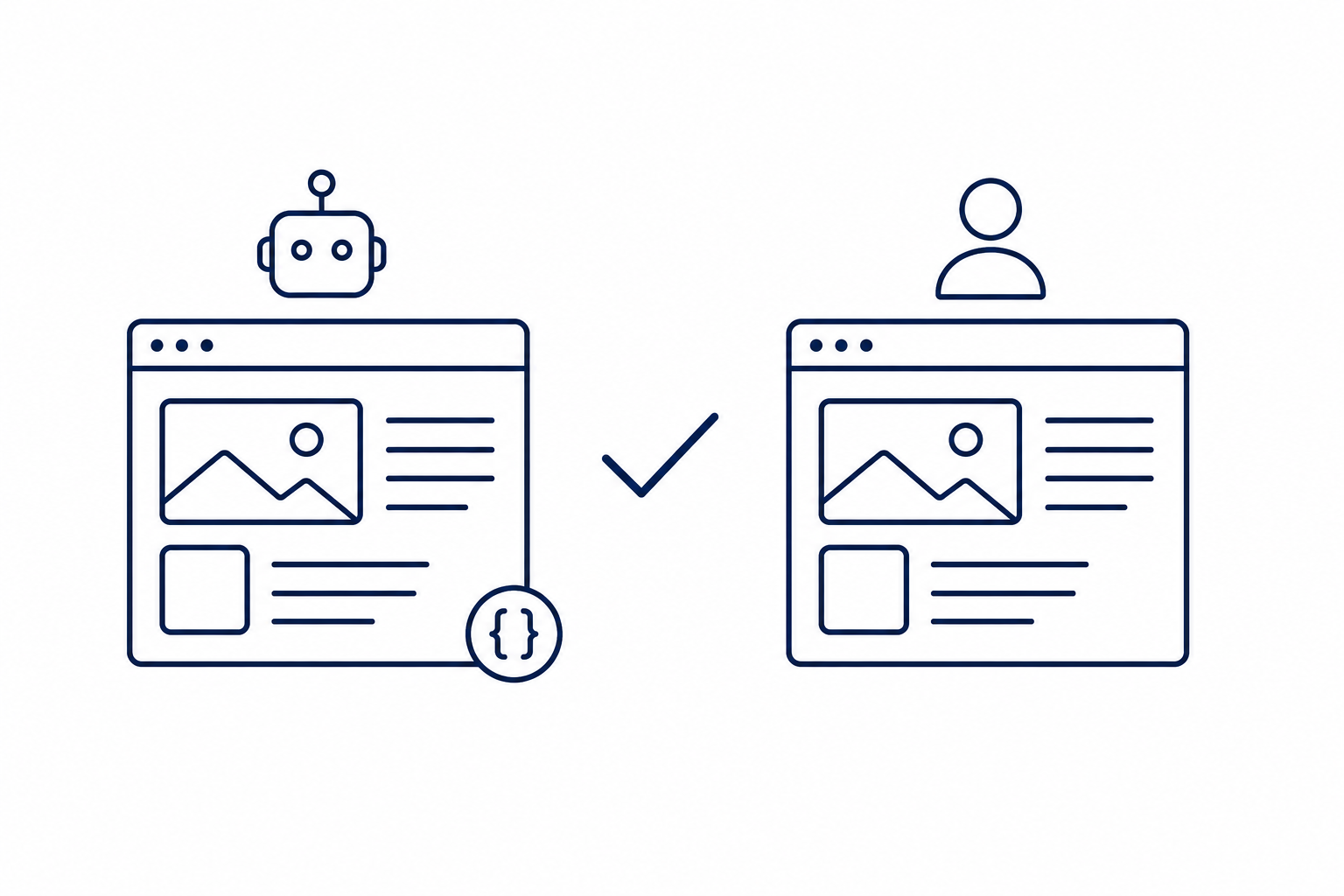
In practice, this is straightforward to set up. A publisher wraps the paid portion of an article in its own CSS class - say, .paywall - and then references that same class in the article's structured data. From that point on, Google knows exactly where the restricted content starts and ends, without having to guess.
Problems start when that labeling stops matching reality. Content that's actually free to everyone shouldn't be marked as paid, and vice versa - and the same labeling has to work identically across every version of the page, including mobile.
There's a more fundamental rule underneath all of this: a crawler and a reader have to see the same page.
If the full article isn't meant to be available before login, the publisher should choose an implementation that simply doesn't send that content to the browser at all - rather than sending it and hiding it with CSS. That second approach is called cloaking: Googlebot gets a different version of the page than an ordinary visitor, and Google treats that as a policy violation regardless of the publisher's intent.
A well-built paywall doesn't hide that content exists from Google. It restricts an ordinary reader's access to it.
After implementation, it's worth validating the markup - for example, with a rich results testing tool - and fixing any critical errors. Correct structured data is exactly what lets Google tell a legitimate paywall apart from cloaking, so a mistake here can cost an article its visibility entirely.
At large publishers, there's also the question of crawl budget. Thousands of new articles, category pages, filters and duplicate URLs create an environment where server performance and response time start to affect how efficiently a crawler can move through the whole site.
It's worth treating a paywall rollout as an SEO change, not just a business decision. That means separately tracking search traffic, individual article visibility, click-through rate, and what share of visits end at the paywall before a reader gets to read anything. Overly aggressive restrictions can hurt both user experience and search rankings - so it's better to roll changes out gradually and watch the effect than to set a limit once and forget about it.
The New York Times shows subscriptions can become the main revenue line
The U.S. market already has publishers for whom digital subscriptions aren't an experiment but one of the core pillars of the business.
The New York Times ended the first quarter of 2025 with 11.66 million net digital-only subscribers, after adding roughly 250,000 net subscribers in that quarter alone. Digital-only average revenue per user rose 3.6% year over year, driven largely by subscribers moving off promotional pricing onto higher-priced tiers. Growth in both subscriber count and revenue per user pushed digital subscription revenue up 14.4% year over year in that same quarter - and the company continued adding subscribers through every subsequent quarter of the year.
Digital subscription isn't a side project for a large publisher anymore. It's become the mechanism replacing the revenue print advertising used to provide.
That doesn't mean every outlet can copy this model. The Times has brand recognition, a large existing audience and scale that most publishers simply don't have. Digiday, described above, sits at the opposite end of that same problem - a smaller, specialized outlet for which a hard paywall would have been a risk, not an obvious choice.
A specialized outlet sells more than just an article
A general-news reader might show up for something they'll forget within days. A specialist publication can build value differently.
A reader might pay for data, analysis, expert commentary, tools, newsletters, or organized access to knowledge. The article becomes part of the product rather than the whole product.
The New York Times shows this even within a single subscription. Alongside news, the Times built NYT Cooking into a standalone paid product - a recipe database with step-by-step guides and its own app, launched free in 2014 and turned into a $5-every-four-weeks subscription in 2017, drawing over 10 million monthly users even before that shift. Today it sells separately for about $6 a month or $50 a year, but its bigger role is inside the Times' "All Access" bundle: executives have said repeatedly that subscribers who add Cooking, Games or other non-news products to their plan engage more, churn less, and pay more over time than a news-only subscriber does.
The more specialized the offering, the less sense it makes to treat a single article as the only thing being sold.
That's also an opening for smaller publishers. They don't need to compete with large outlets on volume or traffic if they can build a smaller but genuinely engaged audience around one specific, well-defined need - the way Digiday does within its own niche.
Not every publisher needs a complicated system
For the largest media groups, building sophisticated models that predict a reader's likelihood to convert can make financial sense. For a small outlet, the cost of that kind of system can outweigh the potential payoff.
That's part of why Google's Reader Revenue Manager is a useful option for smaller publishers - a tool that lets an outlet launch paid subscriptions or voluntary contributions without building its own payment infrastructure from scratch. Google takes a 5% transaction fee.
That lowers the barrier to entry considerably. A small newsroom can first test whether readers are willing to pay at all before investing in anything more elaborate.
For a small outlet, simplicity can be an advantage rather than a limitation.
Substack is the clearest example of that kind of simplicity, and it's become impossible to ignore on the U.S. market. The platform lets a writer publish a newsletter with a free and a paid tier, handles billing through Stripe, and takes a flat 10% cut of whatever a writer charges. No separate infrastructure, no negotiation.
By early 2025, Substack had crossed 5 million paid subscriptions across its writers, with the platform's own creators collectively earning roughly $450 million a year in gross revenue. Some of that is concentrated at the very top. Historian Heather Cox Richardson's newsletter, Letters from an American, has more than 2.5 million subscribers and, by outside estimates, over 200,000 paying - enough to outearn most newsroom editors on a single email a night.
But most writers on the platform earn far less, and the typical paid publication charges around $5 a month or $50 a year - a price low enough that a reader can subscribe to several without much friction.
What Substack shows at scale, a lot of small U.S. newsrooms have started doing individually: skip the custom subscription system, charge a simple flat monthly or annual rate, and let the writing carry the sale.
Medium takes the opposite bet: one paywall, thousands of writers
Substack lets each writer set their own price and their own wall. Medium does the reverse - it runs a single, platform-wide paywall, and individual writers opt into it rather than build their own.
Readers get a handful of free articles a month; unlimited access costs $5 a month or $50 a year, with no ads anywhere on the site. A share of every reader's subscription fee is then split among the writers whose paywalled stories that reader actually engaged with - based on how long they read, not on traffic alone. A writer never sets a price or manages billing. They simply mark a story as members-only and let Medium's pooled subscription revenue do the rest.
That's a genuinely different answer to the same problem this whole piece has been circling: who decides what a reader pays for, and how directly is that tied to one specific piece of writing. Substack ties it directly - one writer, one price, one relationship. Medium pools it - thousands of writers sharing one reader base, with individual earnings shaped by engagement rather than a subscription of their own.
Neither model is "the" answer. They're two different bets on the same basic question: does a reader pay a writer, or pay into a pool that writers draw from?
What about the reader who won't pay?
Not every user becomes a subscriber. That doesn't automatically mean they stop being valuable.
Some publishers are experimenting with rewarded ads - a model where a reader unlocks a piece of gated content by watching a short ad instead of paying directly. In this setup, the money doesn't come from the reader at all. The publisher is selling an advertiser something else: a moment of attention and a chance to engage that reader directly.
That's an interesting direction precisely because it doesn't try to turn every reader into a subscriber.
A gentler version of the same logic shows up on platforms built around direct, voluntary support for creators, like Patreon. You're Wrong About, a journalism-driven history podcast, funds its production this way, drawing tens of thousands of supporters who pay a small monthly amount directly to the hosts - proof that with a genuinely engaged audience, this kind of model can support a real ongoing production team.
The hardest case is local news
The toughest challenge belongs to small, regional newsrooms. They don't have the scale of large outlets, their local ad market is limited, and they're often competing against free content produced by publicly funded local government sources.
In that situation, a hard paywall can be too risky. If an outlet doesn't already have a large audience and a strong brand, simply locking articles doesn't automatically create a willingness to pay.
That's one reason subscriptions are just one piece of a larger puzzle at small outlets. Alongside them, sponsored content - commissioned by local businesses and institutions, often through ad platforms that connect publishers with advertisers such as Ads4Media - sits next to grants, donations, and event revenue.
It's worth noting that the choice between paid access and registration doesn't have to mean building a separate, expensive system from scratch. Our CMS 4media includes a built-in Paywall and Registration Wall module, where a publisher decides which content to restrict, whether access requires payment or just registration, and how much material a reader sees before hitting that wall - without building any of it in-house.
A local publisher can't just copy a major newspaper's model. It has to assemble revenue from several smaller sources at once.
The biggest shift might come from search itself
Until now, Google has served publishers in two ways at once. It delivered traffic, and it helped readers discover a brand in the first place.
The growth of AI-generated answers complicates that arrangement. A reader can get an answer to their question without ever visiting the source site, and the publisher can lose the moment where it might have shown an ad, invited a newsletter signup, or nudged someone toward registration.
That threat has a concrete face now. In September 2025, OpenAI launched ChatGPT Pulse, a feature that researches overnight and delivers a personalized morning briefing. Each day it produces a handful of visual cards, built from a reader's chat history, saved memory, and - if connected - their calendar and inbox. It's explicitly modeled on the habit publishers have spent years trying to build: open an app first thing in the morning and get caught up on what matters to you.
One journalist covering the launch put the question bluntly: can this replace your morning newsletter? The difference is that Pulse's "newsletter" has exactly one subscriber. It's written by a model instead of an editor. And it cuts the publisher out of the loop entirely - no click, no ad impression, no registration prompt, nothing for a newsroom to convert.
There's a second problem buried inside the first one: what a reader gets back from an AI tool isn't always reliable, and few examples make that clearer than shopping. The Business of Fashion analyzed how ChatGPT, Claude and Gemini recommend sustainable clothing brands and found that a brand's online reputation and how a shopper phrased the question mattered more to the chatbot's answer than the brand's actual environmental record. In practice, that means a chatbot can recommend a brand that's simply good at talking about sustainability - a pattern regulators call greenwashing - over one that's actually doing the harder, less marketable work.
That finding cuts both ways. If a model is mostly reading what's already been written about a brand rather than verifying what a brand actually does, then being written about - clearly, repeatedly, in places a model is likely to pull from - stops being a nice-to-have for that brand. It becomes close to a requirement. A brand with no coverage, no reviews, no press, is effectively invisible to a chatbot regardless of how sustainable its supply chain actually is. Media coverage isn't just a shopper's discovery layer anymore; it's the training signal for how AI describes a company at all.
That matters for publishers too, not just shoppers. Specialist and trade outlets have spent years building the kind of editorial authority that's supposed to cut through exactly this kind of noise - vetting claims, checking sourcing, calling out greenwashing when they see it. If an AI tool skips that layer and answers straight from a model's read of brand reputation, the publisher doesn't just lose a click. It loses the one thing a subscription was supposed to be worth paying for in the first place: a source a reader can actually trust.
At the same time, Piano's data suggests that readers arriving via AI tools are currently few in number but potentially high in value. In December 2025, they accounted for just 0.23% of all conversions across the publisher base Piano tracks, but their average revenue per reader was $15.50 - compared to $3.36 for an ordinary search visitor.
The scale here is still small, so it's too early to call this a breakthrough. But the direction is worth watching, especially as tools like Pulse specifically target the daily-briefing habit that newsletters were built to own.
How many readers land on a page is becoming less important than the intent they arrive with.
That also changes what a paywall is for. A reader who lands on a specific, deliberate question can be worth more than someone who happened to open five articles off a homepage.
In that context, the newsletter-and-registration approach described above through Digiday's example gains extra weight. A publisher that knows a reader by name and email doesn't have to rely entirely on where that traffic came from - a classic search result, an AI-generated answer, or a briefing tool that never sends a reader to the source at all. It can simply reach that reader directly.
The paywall is no longer a wall
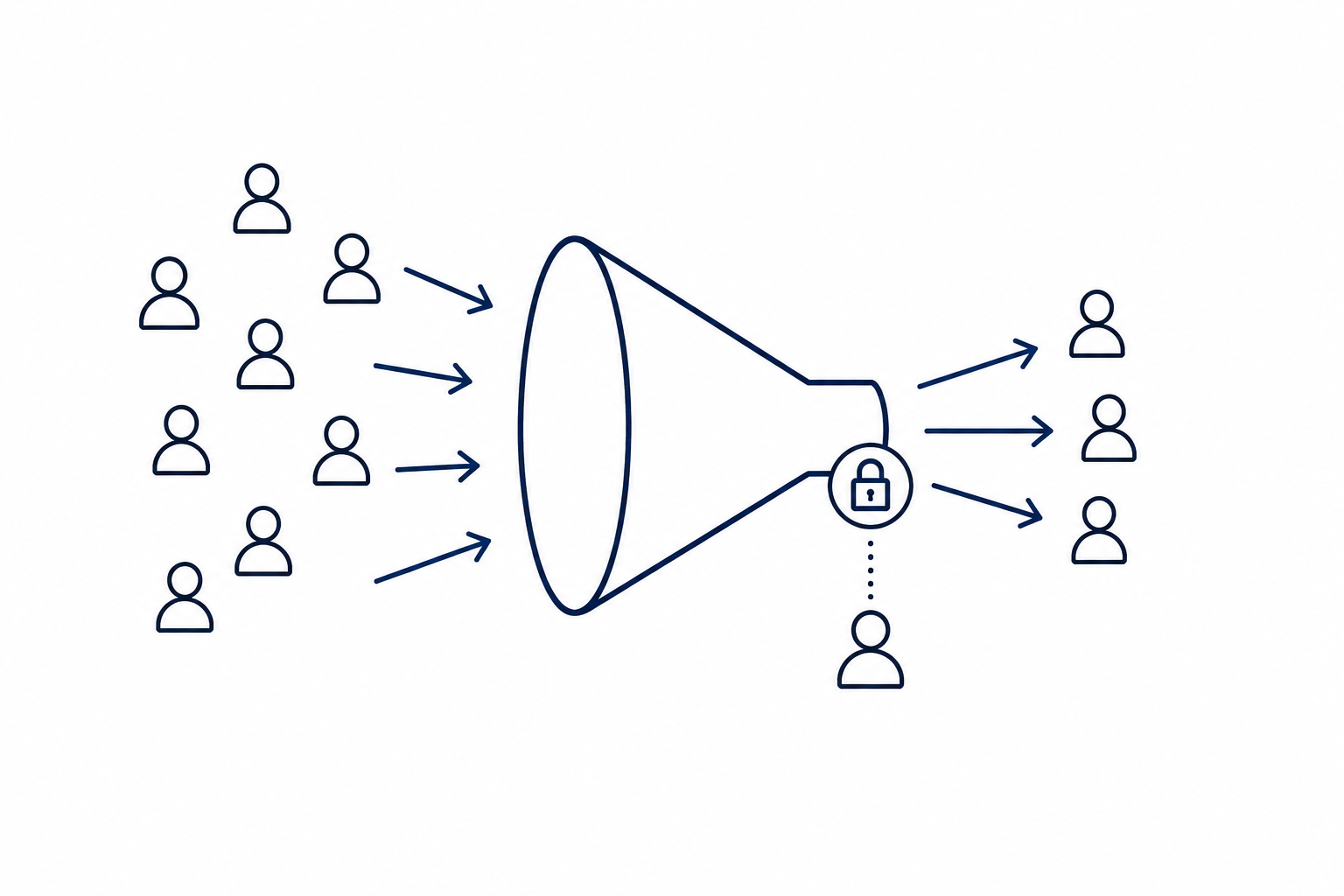
Publishing is shifting away from a simple free-or-paid choice toward multiple ways of monetizing the same attention. One reader might be monetized through ads, another through registration, a third through a subscription, a fourth through voluntary support, and a fifth through access to a specialized product - a paywall is just one of a broader set of ways to monetize a news site, alongside ads, affiliate networks, and sponsored content.
That also means there's no single correct paywall. A different model makes sense for a large general-news outlet than for a business publication, a specialized trade outlet like Digiday, or a small local weekly.
The shared problem stays the same: finding the right balance between how much content to leave open and how much is actually worth restricting.
The best paywall doesn't need to cover most of a site. It just needs to reach the right readers with the right offer - the ones who actually have a reason to pay.
That might be the most important shift happening in how online publishers make money today. A publisher isn't just fighting for the largest possible audience anymore - it's fighting for a relationship with a reader who has a reason to come back, register, and eventually pay.
And in a world where earning attention through search alone keeps getting harder, that relationship might be the most valuable asset a publication has.