polski
 español

 Magdalena Szypulska
Imagine you are looking to buy a new car, but the salesperson only speaks in complicated engine codes. That is exactly what it feels like when you want to publish a sponsored article for your business, and publishers throw acronyms like Ahrefs DR, Majestic TF, or Organic Traffic at you.
If you are a business owner—not a full-time SEO geek—how do you know which numbers actually matter? How do you ensure you aren't throwing money down the drain?
In this guide, we are going to skip the complex academic theories. Instead, we will translate these intimidating SEO metrics into plain English, so you can confidently choose the best platforms to skyrocket your brand's visibility.
However, if your website isn't showing up in search results at all—even when searching for your exact brand name—metrics won't save you yet. Before buying links, you need to diagnose the core issue. Check out our guide: Invisible on Google: 10 Reasons Why and How to Fix Them to make sure your site is actually ready to be found.
Key Takeaways
- Why Buy Sponsored Articles? It is essentially digital PR. A link from a highly respected website acts as a powerful "vote of confidence" that tells Google your site is trustworthy, pushing you higher in search results.
- The "Big Three" Metrics: You need to look at DR (Domain Rating) for overall reputation, Organic Traffic for real human eyeballs, and TF (Trust Flow) to ensure the site isn't spammy.
- The Tools of the Trade: SEO professionals rely on tools like Ahrefs (to check DR and traffic health) and Majestic (to check link quality and Trust Flow).
- The Right Kind of Link: You want links that pass SEO power (often called dofollow), but remember that Google requires paid placements to be marked with a rel="sponsored" tag. A healthy website has a natural mix of both.
Lost in the new marketing jargon? Entities, Knowledge Graph, Topical Authority, INP... The SEO language is evolving faster than ever. To help you navigate this, we recommend keeping an SEO Glossary handy. It will help you prove to Google that you are a trusted human expert, not just another AI content generator.
Table of contents
- Why Sponsored Articles Are More Than Just Ads
- Your Cheat Sheet: The SEO Glossary
- Sponsored Articles: The Pros and Cons
- How Google "Sees" Your Links (Understanding Tags)
- The Professional Tools: Ahrefs and Majestic
- SEO and AI: What the Future Holds
- How to Choose the Right Publisher
- Your Investment in the Future
Why Sponsored Articles Are More Than Just Ads
Think about how you choose a good restaurant or a mechanic. You ask someone you trust. If a respected local expert recommends a place, you go there.
Google operates exactly the same way. Your website is your business, and Google is the giant marketplace. A sponsored article published on a well-known, high-quality portal acts as a public endorsement from a trusted expert.
When that article includes a link pointing back to your website, Google sees it as a powerful signal: "If this big, important site is linking to them, they must be valuable." The more high-quality recommendations (links) you get, the higher Google will rank you. Higher rankings mean more customers walking through your digital front door.
Your Cheat Sheet: The SEO Glossary
Before you spend a dime on a sponsored article, let's decode the metrics you will see in publisher offers.
- SEO (Search Engine Optimization): The art of organizing your digital storefront so that Google—and your customers—can easily find it. If you want to build a foundation that naturally attracts traffic from day one, check out our guide on Site Structure Optimization: How to Build an Architecture That Google Loves.
- Backlink: This is your digital recommendation. It is an active, clickable link on someone else's website that points directly to yours.
- Domain: Your website's address (e.g., www.yourcompany.com). While your main domain is crucial, the way you name your specific subpages matters just as much. Dive into The Ultimate Guide to URL Structure for SEO to get it right.
- Domain Authority (DR / DA): Think of this as a website's "credit score" on a scale from 0 to 100. The higher the number, the more powerful and reputable the site is. DR (Domain Rating) comes from Ahrefs, while DA (Domain Authority) comes from Moz. You want to publish on sites with a solid DR.
- Organic Traffic: This is the golden metric. It shows the estimated number of real, breathing humans who visit that website from Google searches every month. High organic traffic proves the site is alive and loved by Google.
- Trust Flow (TF) & Citation Flow (CF): These come from a tool called Majestic. Trust Flow (TF) measures the quality and trustworthiness of a site (0-100). Citation Flow (CF) measures the quantity of links pointing to it. You always want a high Trust Flow—it means the site hangs out in good digital neighborhoods.
Sponsored Articles: The Pros and Cons
The Pros
- Long-Term Value: Unlike a Facebook ad that vanishes the second your budget runs out, a sponsored article stays online. That link works for you 24/7 for months, or even years.
- Building Trust (E-E-A-T): Being featured on respected portals establishes your brand as an industry authority, which Google loves.
- Targeted Audience: By choosing niche or local portals, you put your brand directly in front of people who actually care about your services.
- Massive SEO Boost: High-quality backlinks are still one of the strongest ranking factors in Google's algorithm.
The Cons
- Upfront Investment: Publishing on high-authority sites costs money. Think of it as buying digital real estate rather than a quick ad.
- Patience Required: SEO is a marathon. You won't see your rankings jump overnight. Google needs time to crawl, index, and evaluate your new links. (Pro tip: You can help Google discover your new links and content much faster by properly organizing your XML files. Learn how in The Modern Sitemap in Practice: How to Help Google Discover Your News Portal and More).
- The Risk of Bad Neighborhoods: Buying a cheap link on a spammy, low-quality site can actually hurt you. That is why checking metrics is mandatory.
How Google "Sees" Your Links (Understanding Tags)
When a portal links to you, they attach invisible tags in the code that tell Google how to treat the link.
- Standard Link (Often called dofollow): This has no special tags. It tells Google: "I completely vouch for this site, pass my SEO authority over to them." This is highly desirable.
- rel="sponsored": Google specifically asks publishers to use this tag for any paid collaborations or sponsored posts. It keeps you safe from Google penalties while still signaling that your business is being talked about.
- rel="ugc" (User Generated Content): Used for forum posts or blog comments where the website owner doesn't fully control the content.
- rel="nofollow": This tells Google: "I am linking to this site, but I am not endorsing it." While it doesn't pass traditional SEO power, in the era of AI-driven search (Google SGE), a nofollow link from a major news site is still a fantastic brand mention that builds credibility.
What is "Anchor Text"? Anchor text is the visible, clickable word or phrase that holds the link (usually blue and underlined). If you run a plumbing business, having the anchor text say "reliable emergency plumber" instead of "click here" gives Google massive clues about what you do.
Speaking of how Google interprets your links and content, there is another technical aspect you must watch out for when distributing articles across multiple portals. To ensure your paid placements don't get flagged as duplicate content, read up on The Canonical Tag in Sponsored Content: How to Make Sure Your Links Actually Move the Needle.
The Professional Tools: Ahrefs and Majestic
You don't need to guess if a website is good. SEO professionals use heavy-duty scanners to check a site's health before buying an article.
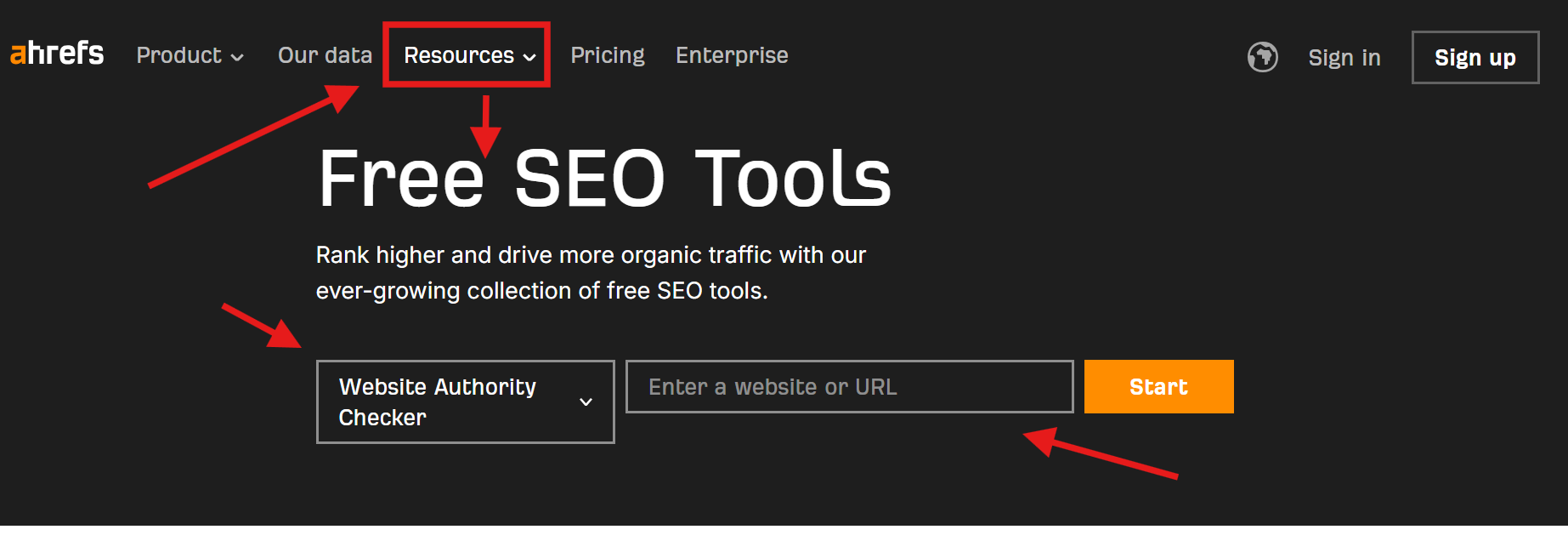
Ahrefs
Think of Ahrefs as the Swiss Army Knife of SEO. It scans the entire internet to give you a site's overall health check. You use Ahrefs to look at the DR (Domain Rating) and to verify if the site actually has real Organic Traffic.
Majestic
Majestic is the internet’s historian. It specializes in mapping out exactly who is linking to whom. You use Majestic to check the TF (Trust Flow) to ensure the website isn't artificially inflating its numbers with spam.
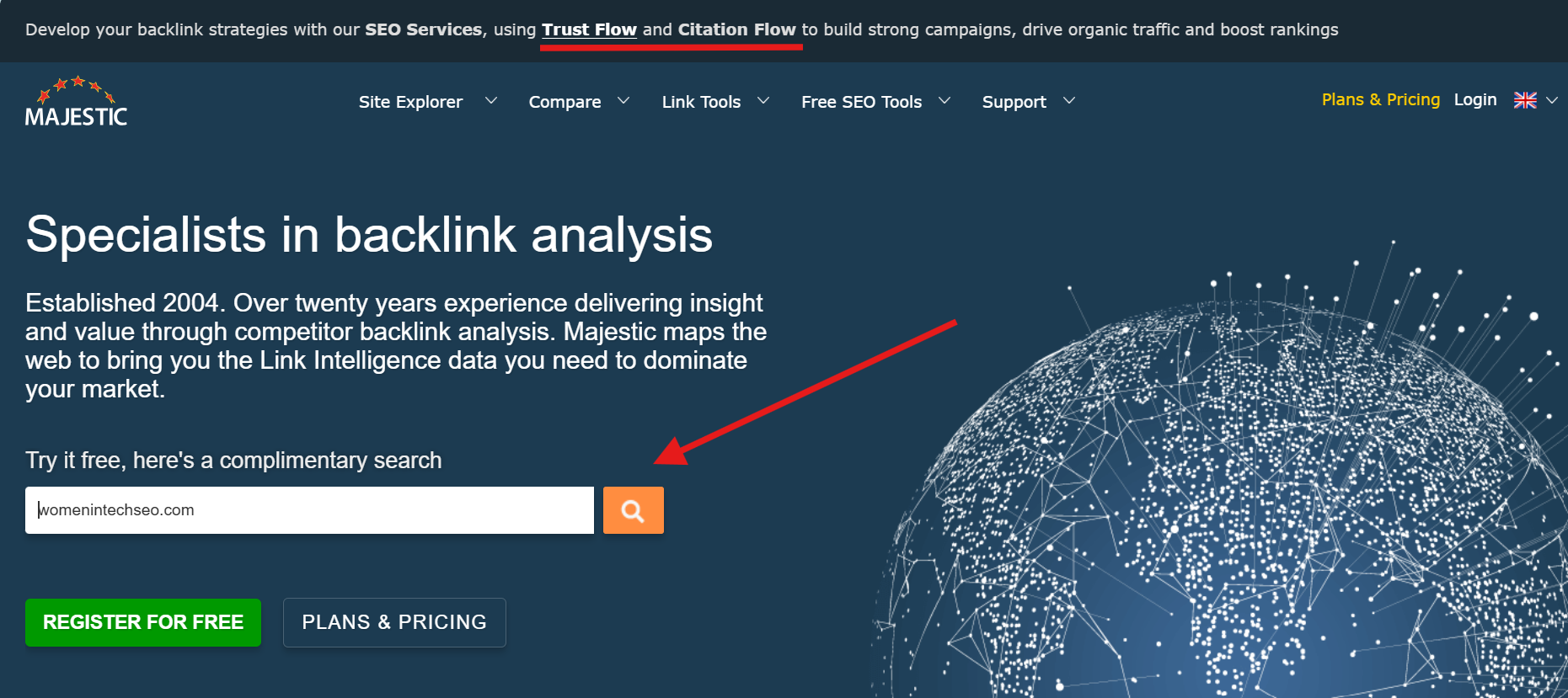
Using these tools guarantees that your marketing budget is spent on sites that actually move the needle.
But remember, once you buy those links, you need to monitor the actual results on your own website. To track exactly how much real human traffic those placements are bringing you, make sure you configure your analytics properly. We explain the entire process in Measuring Website Traffic: A Technical Guide to Google Analytics 4 and Search Console.
SEO and AI: What the Future Holds
Artificial Intelligence, like ChatGPT and Google's new Search Generative Experience (SGE), is shifting the landscape. Search engines are moving away from just matching keywords to actually understanding concepts and providing direct answers.
This means your strategy must evolve. Instead of just buying links for the sake of links, your sponsored articles must offer authentic, valuable content that proves your expertise.
Navigating this new AI-driven landscape requires a completely new approach to content creation. If you want to future-proof your digital marketing strategy, we highly recommend reading AI Mode vs SEO: How to Survive and Rank in the Era of Generative Search.
How to Choose the Right Publisher
Before you even start looking for publishers, make sure your own website is ready to handle the incoming traffic. Even the strongest backlinks won't help if your site takes ages to load. Discover why your technical setup is crucial in our article: Speed is the New Currency: Why Your CMS Choice Could Kill Your SEO.
The Golden Criteria
- High SEO Metrics: Look for a solid DR and a healthy Trust Flow.
- Real Organic Traffic: Make sure actual humans visit the site.
- Topical Relevance: If you sell financial software, a link from a respected finance blog is worth 10x more than a link from a random cooking website.
Where to Find Them
While there are massive, general market platforms out there, finding targeted, high-quality placements requires the right partner.
This is where specialized platforms like ADS4media shine. Instead of just focusing on giant national news sites, ADS4media specializes in local and regional media with highly engaged, real user traffic.
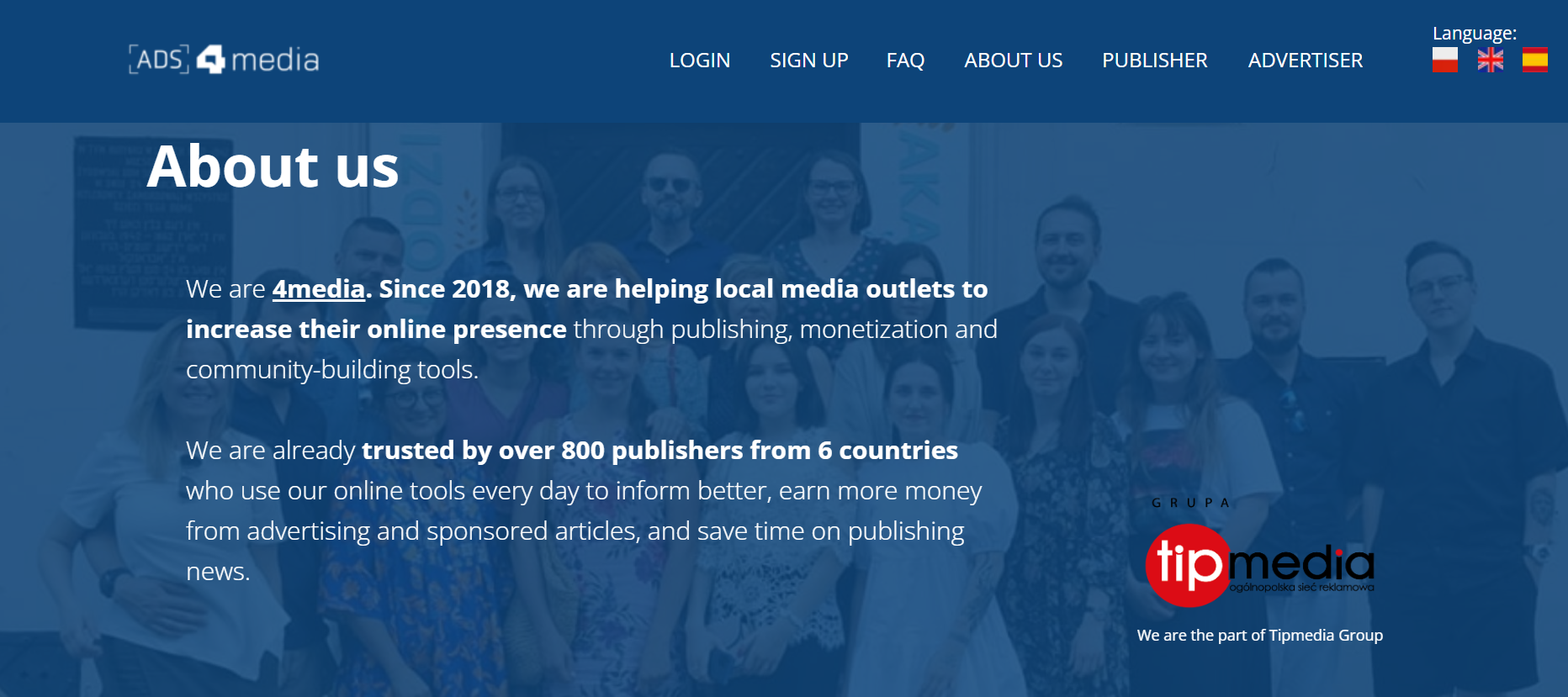
- Reach Your Exact Audience: With a database of over 8,000 portals, you can pinpoint the exact city, region, or niche category that matches your business.
- Better SEO Visibility: Publishing on thematic local sites with strong SEO parameters gives you highly relevant, powerful backlinks.
- Credibility: An article on a trusted local news portal feels like a genuine recommendation, not a pushy ad.
- Speed and Automation: You can browse, select, and publish your articles all in one intuitive dashboard, saving you hours of email negotiations.
Your Investment in the Future
Buying a sponsored article is not a fleeting expense; it is a strategic investment in your digital foundation. Every high-quality link you secure, paired with smart anchor text and great content, is a brick building your fortress in Google's rankings.
Now that you know how to read the metrics—DR, TF, and Traffic—you can stop guessing. You can look at a publisher's offer, analyze the numbers, and confidently invest in the placements that will actually drive your business forward.